Following several accidents and incidents where language-related miscommunication was identified as a contributing factor, ICAO introduced the LPRs through amendments to Annexes 1, 6, 10, and 11.
The fundamental intention is to reduce communication breakdowns in international aviation operations by establishing a standardized framework for assessing and certifying language ability.
ICAO developed a six-level rating scale with holistic descriptors covering six linguistic areas. CommCheck develops five of these—pronunciation, structure, vocabulary, fluency, and comprehension.
Level 4 (Operational) is established as the minimum proficiency level required for pilots and controllers engaged in international operations. This level represents the threshold at which a speaker can communicate effectively in routine, non-routine, and unexpected situations, though some linguistic limitations may be evident.
Importantly, Level 4 is not "basic" English—it requires speakers to handle the complexities of real-world radiotelephony, including the ability to clarify, confirm, and resolve apparent misunderstandings.
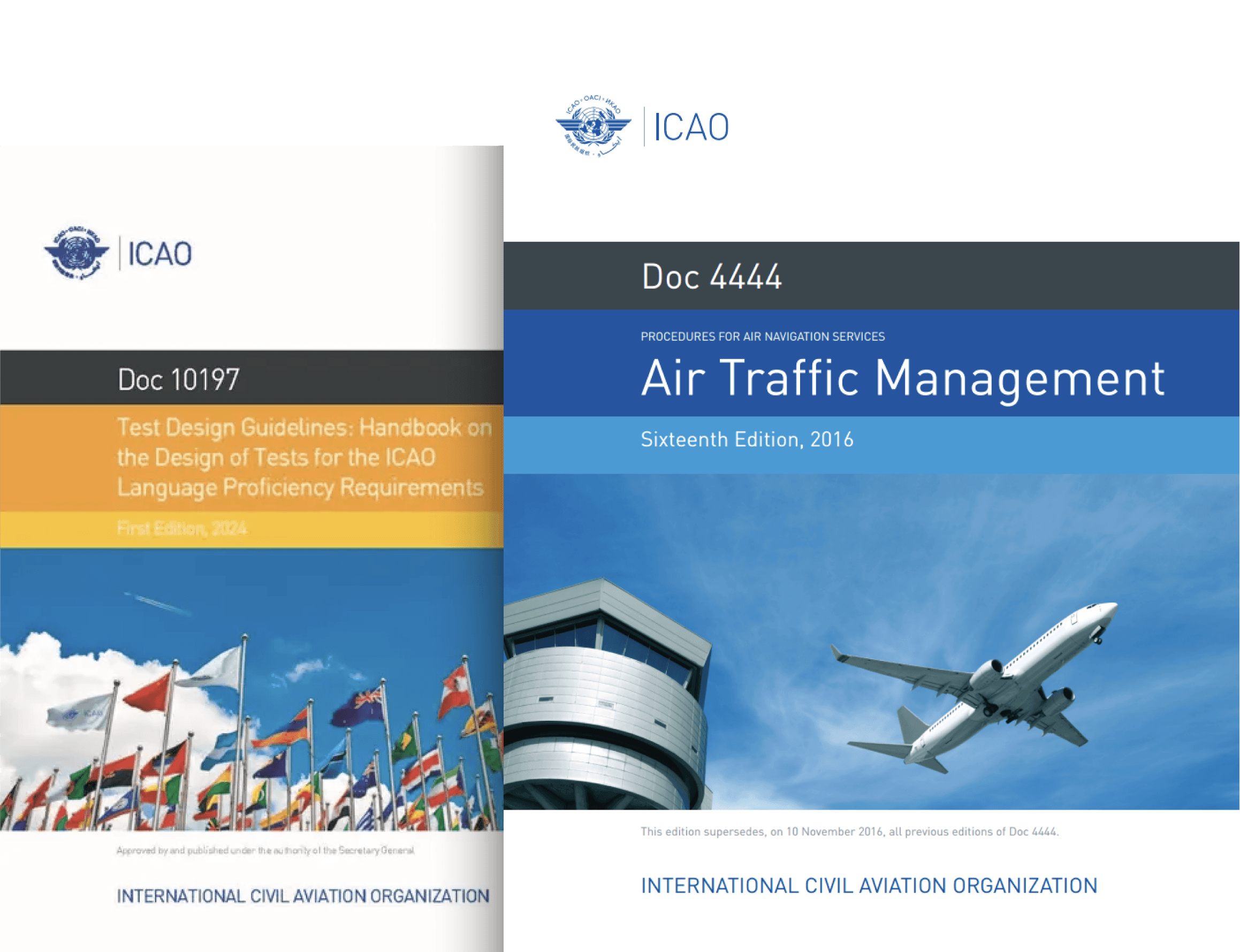
ICAO Doc 9835 Manual on the Implementation of ICAO Language Proficiency Requirements provides the foundational guidance for Contracting States:
Interpretation of the holistic descriptors that define each proficiency level across all six linguistic areas.
Guidance on developing and administering valid, reliable testing programmes for language proficiency evaluation.
Frameworks for building effective training programmes that develop operational communication skills.
Testing intervals based on demonstrated proficiency level, ensuring ongoing compliance and skills maintenance.
The LPRs represent a performance-based approach, focusing on operational communication ability rather than academic language knowledge.
CommCheck supports the development and assessment of five key language skills assessed under the ICAO LPR framework: pronunciation, structure, vocabulary, fluency, and comprehension.
Through realistic radiotelephony lessons and scenarios, trainees develop pronunciation that is intelligible to the international aviation community, even when influenced by accent or dialect. Exercises reinforce grammatical structures—helping trainees use basic and complex patterns creatively while minimizing errors. Vocabulary development focuses on building the range and accuracy needed for effective communication on common, work-related topics.
CommCheck instant feedback supports fluency by encouraging trainees to produce language at an appropriate tempo, with natural phrasing and without excessive hesitation. Comprehension exercises build the ability to understand both standard phraseology and plain language use in operational contexts—an essential skill when communications deviate from routine exchanges.
While CommCheck is not an approved proficiency evaluation tool, its training metrics and analytics provide instructors and training providers with valuable data that can inform assessment. As part of a comprehensive training programme, CommCheck helps build the foundational language and radio use skills as well as domain knowledge that trainees need to communicate confidently.
Intelligible pronunciation even when influenced by accent or dialect.
Basic and complex grammatical patterns used creatively with minimal errors.
Range and accuracy for effective work-related communication.
Appropriate tempo with natural phrasing and minimal hesitation.
Understanding of phraseology and plain language in operational contexts.
SERA is the Simulated Environment for Realistic ATC that extends language proficiency training into immersive scenario-based flight training.